
Suggested Best Practices for Use of the DOB and SSN in Searching for Criminal Records
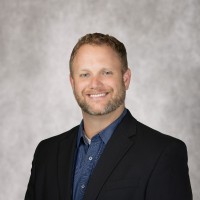
Ryan Carter is a seasoned leader with over 17 years of experience helping churches create safer environments where families can thrive. Much of his impact has come through his leadership at Protect My Ministry, a trusted solution from Ministry Brands specializing in background screening, risk management, and more. Based in Tampa, Florida, Ryan is more than a leader in church safety—he’s a devoted husband and proud father of four. In his free time, he enjoys channeling his competitive spirit into Spartan races, embracing both physical challenge and mental toughness. Ryan’s journey includes a broad background in recruiting, training, quality control, and strategic planning, all of which fuel his passion for helping ministries grow stronger, safer, and more equipped to serve.
Screening and training of childcare workers is a must for any child- and youth-serving organization. Parents entrust our organizations with the care of their children, so we have a responsibility to be diligent in discerning who has access to those children. If our ministries are to be safe places for kids to hear the gospel, and we are to be good stewards of the lives entrusted to our care, then child safety cannot be an afterthought or “bonus” feature of our programming. It must be central.
A rigorous screening process would include an application, reference checks, interview, and background check. Every staff member and volunteer who will work with children should be screened according to these measures. But it’s not enough to initiate the screening process – the materials returned for each applicant must be reviewed for yellow flags that warrant a follow-up conversation or red flags that may disqualify them from service with children.
Background checks, while insufficient as a sole screening measure, are an important part of the overall screening process. There are three identifiers used in background screenings: Proper name, Date of birth (DOB), and Social Security number (SSN). A better understanding of how these identifiers are used by background screening providers can help ensure you receive a full and accurate report and help you better understand the results.
Proper Name & Date of Birth
All criminal cases are filed in the courts under an individual’s proper name (first and last) and DOB at the time of arrest or direct filing. Please note that a Social Security number is not typically available as an identifier on a court’s public access system. Since the proper name and DOB are the primary identifiers available when searching for criminal cases, Protect My Ministry recommends that these primary IDs be accurately determined before an end user (client) submits any background report request. Failure to submit the true name and DOB will often result in a missed criminal record.
Some common methods available when it comes to accurately determining an individual’s true name and DOB is to request a copy of their driver’s license, passport, or birth certificate before submitting a background request. Potential employees and volunteers may be inconvenienced by some requirements organizations may set forth as part of the screening process, however, these inconveniences are minor compared with the potential risk and consequences that could result in placing an individual in a sensitive position because of a missed criminal record due to erroneous primary identifiers used to conduct the criminal search.
Social Security Number
As far as the SSN being required to conduct a criminal search, while it is not “mandatory”, failing to provide one does “weaken” the overall search capabilities of the databases. Criminal records are searched by name and DOB only, however the SSN can also be used to pull the address history first, showing all names used, and add the newfound alias name combinations into the search parameters before running it against our National Criminal and National Sex Offender databases.
So, consider the following example of how we handle a Jane Doe request with a social provided: The Protect My Ministry system will pull that address history (this is based on bill pay tied to your SSN) first and find that Jane Doe has gone by Jane Miller and Jane Williams. Then the system will search Jane Doe, Miller, and Williams in National Criminal and Sex Offender databases, thus providing a more thorough search at no additional fees or data entry to you.
Lastly, the address history that is based on the SSN is also a good way for you to verify that someone is who they say they are and where they live. This is important, since the National Criminal and Sex Offender databases are driven or searched by name and DOB only, no SSN.
- Careful Grace: Integrating Offenders and Violent Criminals into Church
 One of the most frequent questions we receive from churches and ministry leaders is about integrating offenders into church. They wonder “Should we do it,” and “What are best practices as we carefully consider protection and stewardship.” We as pastors and ministry leaders know first hand that God is in the business of changing lives. No one, not even the worst of society’s criminals and offenders, is too far from the grace of God and the gospel. We know that the Lord can work in anyone’s life to bring redemption and salvation.
 - Fortify Initiative equips church leaders to protect, even as they build
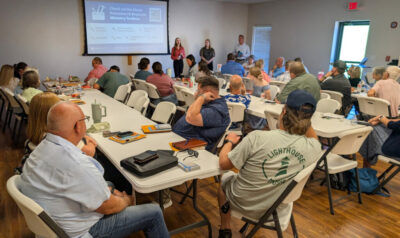 SPRINGFIELD, Tenn. – The Scripture verse printed on the front of a resource from the Fortify Initiative may not seem the most obvious choice for an effort focused on protecting the vulnerable. One might expect a verse about children or sheep. But the verse for Fortify is Nehemiah 4:17-18, which says that the men rebuilding Jerusalem’s walls carried their building materials in one hand and a weapon in the other. Verse 18 says, “Each of the builders had his sword strapped around his waist while he was building. …”
 - Practical virtual trainings help churches strengthen abuse prevention
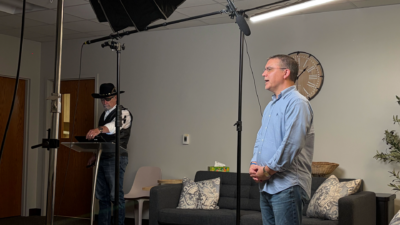 Abuse prevention in ministry can feel overwhelming, but free online webinars offered by the Southern Baptist Convention (SBC) Virtual Training Institute and MinistrySafe break complex safeguarding concepts into clear, actionable steps church leaders can implement today. The SBC Virtual Training Institute offers ministry leaders free, practical training designed to strengthen churches in safety, care, and responsible leadership.
 - Advising on Whether to Limit Liability or Care for Victims
 While abuse of a child by an adult is terrible, it’s usually straightforward to evaluate what is happening. But what about sexual misconduct between children? Is it always abuse? No. Is it always illegal? No. And what should we do about it? The impact on children’s lives is not measured by whether the actions are abuse or a crime—so we must take it seriously.[1] As we evaluate how to respond, it may help to use as an example several common situations. We’ll take the perspective of behavior that is discovered by a church or ministry, but parents will also have to evaluate situations they uncover.
 - ‘Don’t Leave Here and Do Nothing’: SBC Panel Calls Churches to Act on Child Exploitation
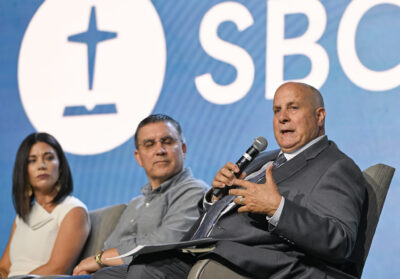 State and federal officials, survivors, and ministry leaders gathered at the 2026 SBC Annual Meeting to move Southern Baptist churches from awareness to action on child abuse, sexual exploitation, and human trafficking. She was going to church the entire time it was happening. That was the disclosure Olivia Littleton, senior director of Survivor Services for One More Child, made to a room full of Southern Baptist pastors and ministry leaders at the 2026 SBC Annual Meeting. A survivor of sexual exploitation herself, Littleton made the point with quiet precision: the children the Church is trying to protect may already be sitting in its pews.