Loving the Vulnerable with Your Actions

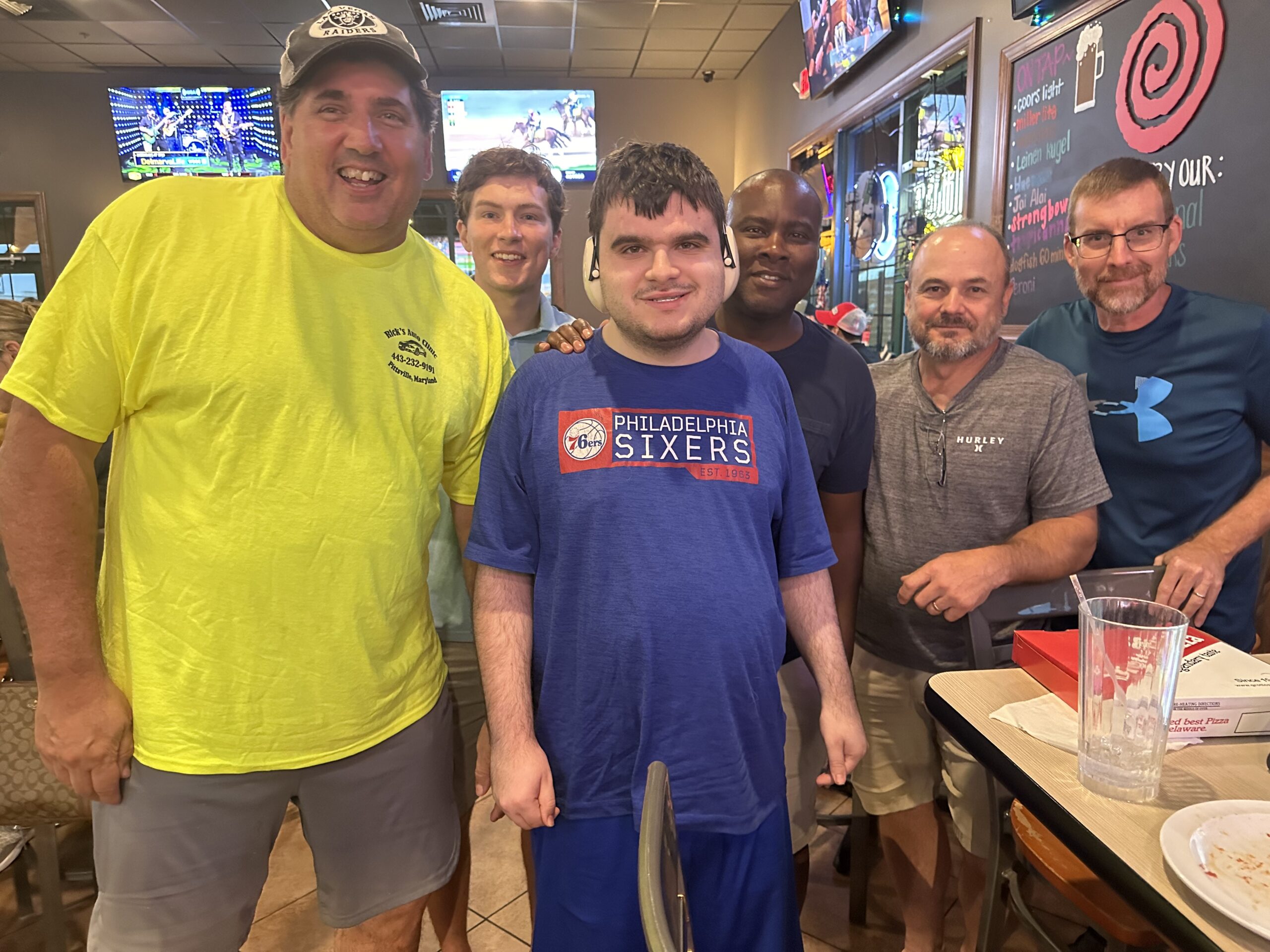
Tom Stolle is the executive director of the Baptist Convention of Maryland/Delaware. Stolle began serving the BCM/D as comptroller in 2004 and has held the positions of chief operating officer, director of human resources, associate executive director, chief financial officer and interim executive director. He met his wife Shelley through mutual friends, and they were married in 1990. They have three adult sons, Jordan Thomas (J.T.), Jake and Jimmy. As Stolle prepared to work with the BCM/D as Chief Financial Officer, he and Shelley discovered their young son, Jimmy, had severe, life-altering, family-changing intellectual disabilities. Over the years, Stolle openly shared his and Shelley’s struggles as they loved and cared for Jimmy, often with tears and emotional and physical scars. His candid openness touched many hearts. He became passionate about assisting churches in starting and strengthening their disability ministries, and that passion became a catalyst for BCM/D’s current emphasis on disability ministry.
Sexual assault is an epidemic in America. Per Rape & Incest National Network (RAINN), every 68 seconds an American is sexually assaulted, and every 9 minutes, that victim is a child. That should get your attention! It’s horrifying. It’s evil.
For me, this issue is personal. As a parent of a young man affected by developmental and intellectual disabilities, I know my son is extremely vulnerable. I wanted to learn more. I wanted to protect him. And what I learned from my research shook me to my core.
Per National Public Radio (NPR), individuals affected by intellectual disabilities are sexually assaulted at seven times the rate of people without disabilities. Additionally, per the Pennsylvania Coalition Against Rape, more than 90 percent of individuals affected by developmental disabilities will experience sexual abuse in their lifetime, and 49 percent will experience ten or more abusive incidents.
For individuals like my son, the statistics paint a grim picture. It’s not a matter of “if” for him. It’s a matter of “when.” It’s not one child every nine minutes. It’s much worse. It’s much more frequent. Keep in mind that while my son is physically an adult, mentally, he will always be a child.
To adequately consider the scope of this issue, consider that there were approximately 8.4 million people affected by an intellectual or developmental disability in the United States in 2020. I believe Jesus wants these individuals to know Him and to know He loves them.
Like many individuals affected by these types of disabilities, my son is compliant. He is dependent on caregivers and others who provide support, and he can be easily taken advantage of by a perpetrator. For individuals like my son, the church must not ignore this reality.
How can the church say, “Everyone is welcome,” but not put safeguards in place to protect the vulnerable? How can the church say, “Jesus loves you,” but not put policies and procedures in place to protect the vulnerable? If a child or a vulnerable adult is abused in church, even though that person has been told they are loved, they may conclude in their own mind that God hates them. To go to the house of God and to be abused is one of the vilest forms of evil.
Jesus said in Mark 9:42 (ESV), “Whoever causes one of these little ones who believe in me to sin, it would be better for him if a great millstone were hung around his neck and he were thrown into the sea.”
Jesus is saying that a person would be better off dead than causing a child to sin.
Failure to protect the vulnerable in the church and the resulting abuse can easily drive these children away from Jesus. Saying we love them must be more than empty words. The words must be evidenced by action.
My son gets excited when he goes to church. He has men who care for him, protect him, and share the Gospel with him. Policies and procedures are put in place to protect him. They say they love him; their actions prove they do. There is consistency. There is protection. He can experience the love of Jesus for himself in the ways he is able.
I am asking the churches to examine their policies and procedures and prioritize protecting the vulnerable by developing and maintaining them.
Love must be backed up by action. Jesus made no empty promises. Neither should His church.
Let’s love well! Let’s prove our love in our actions! Amen!
- Careful Grace: Integrating Offenders and Violent Criminals into Church
 One of the most frequent questions we receive from churches and ministry leaders is about integrating offenders into church. They wonder “Should we do it,” and “What are best practices as we carefully consider protection and stewardship.” We as pastors and ministry leaders know first hand that God is in the business of changing lives. No one, not even the worst of society’s criminals and offenders, is too far from the grace of God and the gospel. We know that the Lord can work in anyone’s life to bring redemption and salvation.
 - Fortify Initiative equips church leaders to protect, even as they build
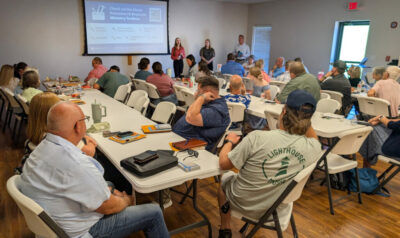 SPRINGFIELD, Tenn. – The Scripture verse printed on the front of a resource from the Fortify Initiative may not seem the most obvious choice for an effort focused on protecting the vulnerable. One might expect a verse about children or sheep. But the verse for Fortify is Nehemiah 4:17-18, which says that the men rebuilding Jerusalem’s walls carried their building materials in one hand and a weapon in the other. Verse 18 says, “Each of the builders had his sword strapped around his waist while he was building. …”
 - Practical virtual trainings help churches strengthen abuse prevention
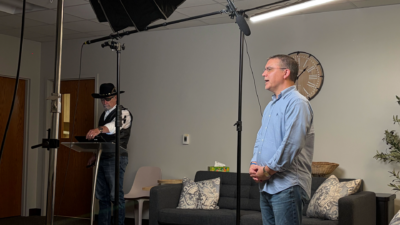 Abuse prevention in ministry can feel overwhelming, but free online webinars offered by the Southern Baptist Convention (SBC) Virtual Training Institute and MinistrySafe break complex safeguarding concepts into clear, actionable steps church leaders can implement today. The SBC Virtual Training Institute offers ministry leaders free, practical training designed to strengthen churches in safety, care, and responsible leadership.
 - Advising on Whether to Limit Liability or Care for Victims
 While abuse of a child by an adult is terrible, it’s usually straightforward to evaluate what is happening. But what about sexual misconduct between children? Is it always abuse? No. Is it always illegal? No. And what should we do about it? The impact on children’s lives is not measured by whether the actions are abuse or a crime—so we must take it seriously.[1] As we evaluate how to respond, it may help to use as an example several common situations. We’ll take the perspective of behavior that is discovered by a church or ministry, but parents will also have to evaluate situations they uncover.
 - ‘Don’t Leave Here and Do Nothing’: SBC Panel Calls Churches to Act on Child Exploitation
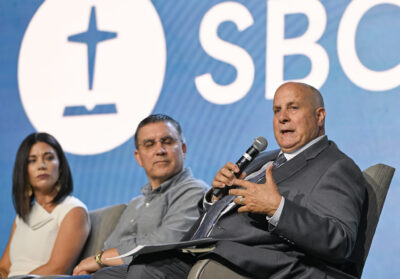 State and federal officials, survivors, and ministry leaders gathered at the 2026 SBC Annual Meeting to move Southern Baptist churches from awareness to action on child abuse, sexual exploitation, and human trafficking. She was going to church the entire time it was happening. That was the disclosure Olivia Littleton, senior director of Survivor Services for One More Child, made to a room full of Southern Baptist pastors and ministry leaders at the 2026 SBC Annual Meeting. A survivor of sexual exploitation herself, Littleton made the point with quiet precision: the children the Church is trying to protect may already be sitting in its pews.