
Resilient Discipleship: Why Readiness Matters for the Church Today

With over 25 years of service spanning intelligence, military, and ministry roles, Chris has led operations across more than 40 countries, specializing in security analysis, protective operations, intelligence, and emergency planning. As Director of Safety and Risk Management for a multi-site/multi-state church, he oversaw protective strategies for 14 campuses, supervised more than 200 contracted law enforcement officers, and provided leadership for a volunteer security team of over 700 personnel. His expertise lies in building faith-driven, resilient teams that protect the momentum of Gospel-centered movements.
In recent months, tragic headlines have reminded us again that churches are not immune to risk. From violence and fire to medical emergencies and storms, disruption often arrives without warning. Yet too often, churches either avoid the conversation out of fear or delegate responsibility to a small team of volunteers. The result is that when crisis comes, congregations are left unprepared, anxious, and distracted from their calling.
We believe readiness is not about fear or militarization. It is about discipleship. Scripture reminds us in 2 Timothy 1:7 that “God gave us a spirit not of fear but of power and love and self-control.” Readiness flows directly from this truth: the church is called to steward its people with wisdom and courage, equipping them to continue the work of the Gospel undisturbed.
When preparedness is framed this way, it becomes a ministry multiplier, not a burden. Resilient churches embody calm, credibility, and continuity — qualities that strengthen discipleship rather than compete with it.
Three Action Items for Ministry Leaders
1. Equip, Don’t Outsource
Church security is not a side ministry for a few; it is a shared responsibility of the body. Pastors, staff, and volunteers should all have a role in readiness, appropriate to their context. Ushers can be trained in de-escalation, children’s workers in reunification protocols, and members in basic first aid. When readiness is distributed, the whole church carries the weight together, and no one is left alone in a moment of crisis.
2. Build Community Partnerships
Churches that reach out to law enforcement, EMS, and medical providers before a crisis discover that partnerships open doors not just for faster response, but for witness. When officers and medics know the rhythms of a congregation, they can protect it more effectively. And over time, those professional connections often become relational ones, with conversations about readiness giving way to conversations about faith. Partnerships embody neighborly love while strengthening resilience.
3. Start with Children
If parents do not feel their children are safe, discipleship will always be disrupted. That’s why readiness begins with the youngest and most vulnerable. Background checks, check-in systems, and parent-child reunification drills may seem simple, but they communicate profound care. A church that stewards children well demonstrates Christlike love and earns trust in the wider community.
Moving Forward with Courage and Hope
Resilience is not about building walls around the church. It is about strengthening the body within it. A congregation that prepares well frees itself to serve faithfully, preach boldly, and disciple consistently, no matter the environment. By equipping leaders, building partnerships, and protecting children, churches live out the call of 2 Timothy 1:7 — not with fear, but with power, love, and self-control.
This is what it means to guard Gospel momentum: not preserving an institution, but protecting the witness of Christ’s body so that worship and discipleship continue without interruption.
- Careful Grace: Integrating Offenders and Violent Criminals into Church
 One of the most frequent questions we receive from churches and ministry leaders is about integrating offenders into church. They wonder “Should we do it,” and “What are best practices as we carefully consider protection and stewardship.” We as pastors and ministry leaders know first hand that God is in the business of changing lives. No one, not even the worst of society’s criminals and offenders, is too far from the grace of God and the gospel. We know that the Lord can work in anyone’s life to bring redemption and salvation.
 - Fortify Initiative equips church leaders to protect, even as they build
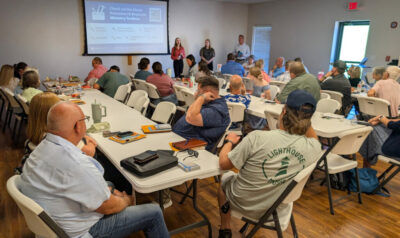 SPRINGFIELD, Tenn. – The Scripture verse printed on the front of a resource from the Fortify Initiative may not seem the most obvious choice for an effort focused on protecting the vulnerable. One might expect a verse about children or sheep. But the verse for Fortify is Nehemiah 4:17-18, which says that the men rebuilding Jerusalem’s walls carried their building materials in one hand and a weapon in the other. Verse 18 says, “Each of the builders had his sword strapped around his waist while he was building. …”
 - Practical virtual trainings help churches strengthen abuse prevention
 Abuse prevention in ministry can feel overwhelming, but free online webinars offered by the Southern Baptist Convention (SBC) Virtual Training Institute and MinistrySafe break complex safeguarding concepts into clear, actionable steps church leaders can implement today. The SBC Virtual Training Institute offers ministry leaders free, practical training designed to strengthen churches in safety, care, and responsible leadership.