
The Path Forward – Repentance & Accountability

Mark Dooley serves as the Associate Executive-Director for the Baptist Convention of Maryland and Delaware. In that role, he leads the work of their Missional Impact Team overseeing the work of Evangelism, Disability Ministry, Disaster Relief, Compassion Ministries, and Sexual Abuse Prevention. He serves on the BCM/D’s Care Team, which seeks to assist and resource churches in protecting children and vulnerable adults. He is married to his wife, Karen, of 39 years, and together they have 4 adult children, 6 grand-children, and grand-child number 7 on the way this fall. He’s a graduate of Southeastern Baptist Theological Seminary, and enjoys gardening and a round of golf in his spare time.
Forty-one years ago I began my first ministry as a youth pastor. The pastor called me into his office on my first day on the job to share with me that one of the church’s leading youth was pregnant. Her father was a deacon and the Sunday School Director. It was a difficult situation, for sure.
I subsequently watched unfold before me a beautiful example of repentance and accountability. The young couple acknowledged their sin, asked forgiveness, and received it from the congregation. The church body supported them and loved them through the process of bringing a beautiful baby boy into the world. Eventually, the couple married shortly after the baby was born and they had graduated from high school.
I’ll never forget the impression it made upon me when, a few years later, the young lady asked me if she could speak to the youth group. I allowed her to do so, and she shared with them that she knew they were looking at her and thinking everything was fine; that it all worked out for her and her husband with no consequences. Then she told them that she loved her son dearly, but what they didn’t know was that every day she looked at him, she was reminded that she had sinned before God – and that was a heavy cost to bear. There were, indeed, consequences.
Sexual sin comes in many forms. But whatever form it takes, the only remedy is repentance and accountability. The couple mentioned above expressed true and genuine repentance. And they willingly accepted the accountability that was asked of them. Even though the scars of their sin remained, the fruit of their repentance was a sweet-smelling aroma both to God and to the church family.
Fast forward about 20 years. A church I know planted another church. However, it was discovered the church planter had begun a sexual relationship with teens in the church plant. This was in a day before best practices for handling such a situation were well known. Even then, however, it was apparent this wasn’t something for church leadership to adjudicate. The authorities became involved and handled the situation according to the law. But the scars were deep. They were not only personal but corporate as well. For years, the shame of that incident was felt, and still is to a degree this day many years later. And, no doubt, the victims continue to feel the impact of that situation even today.
Fast forward almost 20 more years. A pastor in a church posted some pornographic pictures online. When approached, he steadfastly denied any issues, but willingly gave up his phone to be examined. It only took 2 or 3 minutes to discover numerous inappropriate pictures. He had no choice but to confess to his sexual sin. But there was no repentance. And the church wasn’t willing to face accountability for the sinful actions of their shepherd. There was no choice but to disassociate from them.
Things don’t have to proceed this way. Sexual sin may be denied, downplayed, even discarded under a cloak of lies and cover up, but the day will come when all will be revealed at the judgment seat. Waiting until that day will bring eternal disaster. Jesus said, “No, I tell you; but unless you repent, you will all likewise perish” (Luke 13:3, ESV). Repentance and accountability are the only path forward for our Southern Baptist churches and individuals who have been impacted by any manner of sexual sin. May God enable all of us to walk the path of repentance and accountability.
“Whoever conceals his transgressions will not prosper,
but he who confesses and forsakes them will obtain mercy.”Proverbs 28:13 (ESV)
Please visit the Ministry Tool Box to access free resources from the SBC Executive Committee on preventing and responding to abuse. Please also visit our Abuse Reporting page for assistance reporting abuse to the appropriate authorities and to the Credentials Committee.
- Careful Grace: Integrating Offenders and Violent Criminals into Church
 One of the most frequent questions we receive from churches and ministry leaders is about integrating offenders into church. They wonder “Should we do it,” and “What are best practices as we carefully consider protection and stewardship.” We as pastors and ministry leaders know first hand that God is in the business of changing lives. No one, not even the worst of society’s criminals and offenders, is too far from the grace of God and the gospel. We know that the Lord can work in anyone’s life to bring redemption and salvation.
 - Fortify Initiative equips church leaders to protect, even as they build
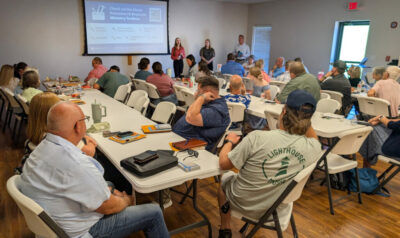 SPRINGFIELD, Tenn. – The Scripture verse printed on the front of a resource from the Fortify Initiative may not seem the most obvious choice for an effort focused on protecting the vulnerable. One might expect a verse about children or sheep. But the verse for Fortify is Nehemiah 4:17-18, which says that the men rebuilding Jerusalem’s walls carried their building materials in one hand and a weapon in the other. Verse 18 says, “Each of the builders had his sword strapped around his waist while he was building. …”
 - Practical virtual trainings help churches strengthen abuse prevention
 Abuse prevention in ministry can feel overwhelming, but free online webinars offered by the Southern Baptist Convention (SBC) Virtual Training Institute and MinistrySafe break complex safeguarding concepts into clear, actionable steps church leaders can implement today. The SBC Virtual Training Institute offers ministry leaders free, practical training designed to strengthen churches in safety, care, and responsible leadership.