
So You Want to Be a Child Safety Coordinator… Maybe?

Jennifer Estrada serves as the Associate Director of Children’s Ministry at Christ Journey Church in Miami, Florida, where she also leads as the Child Safety Policies Coordinator on the church’s Child Safety Team. With a professional background in Exceptional Student Education and over a decade of experience in Family Ministry, she brings both expertise and heart to her work in creating safe, Christ-centered environments for children. Her passion lies in child development and in laying a strong foundation of faith that allows children to experience the love of Jesus without obstruction. She believes that the first impression a child receives of God’s love can shape their entire life—and is committed to ensuring that nothing compromises that sacred opportunity.
I get it—child safety isn’t exactly the role everyone’s lining up for. It doesn’t come with confetti, stage time, or a cool Spotify playlist. But if you’ve found yourself here—whether by calling, conviction, or maybe just a “you’d be great at this!” conversation with your pastor—let me encourage you: it’s worth it. Like, really worth it.
When I stepped into the role of Safety Coordinator at Christ Journey Church, I didn’t have a handbook or a team of experts on standby. What I did have was a deep conviction that protecting children is one of the holiest and most practical things we can do as the Church. I also had a highlighter, a lot of questions, and a strong sense that this job was going to require more of God than me. That was probably the most important thing.
Let me say right away: if this feels too big, too complicated, or too much—good. That’s exactly where it should start, because it keeps you dependent on God. And you’re not doing this alone. There’s a whole community of safety-minded, Jesus-loving people out here who are rooting for you.
Here’s what I’ve learned so far, and what I’d tell anyone stepping into this role:
Start with What You’ve Got. Don’t feel like you have to overhaul everything in one day. Begin by pulling out any existing policies. Look for anything that outlines who is working with children and how they were approved. Ask questions like: Do we require a background check? A reference check? Is there a membership or attendance requirement before someone serves? Is there an actual interview happening? (And yes—ask for physical ID!)
Screening Is a Ministry. It’s not just a checklist—it’s the first line of care. Screening is how you create a safe, healthy environment from the ground up. Be honest about your process, and work with available staff or lay leaders to make it stronger.
Train Like It Matters—Because It Does. Child abuse prevention doesn’t stop with screening. It continues through ongoing, intentional training. Equip your leaders to: understand what abuse is and what it looks like, know their legal and moral responsibilities as Mandated Reporters, recognize grooming behaviors, and know what to do—and who to talk to—if something seems off. Ask yourself: How do we know our leaders are ready? If the answer is “because they love Jesus,” that’s a beautiful start—but not enough. Give them a manual. Review it with them. Check in often. When a leader feels informed and supported, they lead with confidence and care.
Build Support Systems. Policy without people is just paper. Surround your safeguards with real support—leaders, check-ins, and clear reporting pathways. At Christ Journey, we set up a direct email monitored by our Child Safety Team, a trained group that includes the Director of Family Ministry, staff from kids and student ministries, our Executive Pastor, and select trusted lay leaders chosen for their experience, roles in the church, or expertise in child advocacy and care. Right now, our team also includes a law enforcement officer, a board member who is also a parent and a leader who is an expert in the field of cybersecurity. This team reviews and responds to reports or concerns in alignment with our church’s Child Protection Plan and state laws. The email provides an accessible, confidential way for anyone—leaders, parents, or volunteers—to raise a concern, ask a question, or seek guidance. Sometimes it’s a clear report; other times, it’s just a gut feeling. Either way, the team takes it seriously. By making communication simple and visible, we create a culture where speaking up is expected—not intimidating.
Trust God with the Heavy Stuff. Your church is trusting you to be a guide. It’s an honor—and sometimes a weight. But God is more invested in protecting the vulnerable than we are. He’ll give you wisdom, provision, and divine nudges as you go. Trust Him. He honors your sacrifice of time, energy, and spreadsheets.
So, do you still want to be a Child Safety Coordinator? Maybe?
I hope so. Because you can do this—and you will. And the kingdom is better for it.
- Careful Grace: Integrating Offenders and Violent Criminals into Church
 One of the most frequent questions we receive from churches and ministry leaders is about integrating offenders into church. They wonder “Should we do it,” and “What are best practices as we carefully consider protection and stewardship.” We as pastors and ministry leaders know first hand that God is in the business of changing lives. No one, not even the worst of society’s criminals and offenders, is too far from the grace of God and the gospel. We know that the Lord can work in anyone’s life to bring redemption and salvation.
 - Fortify Initiative equips church leaders to protect, even as they build
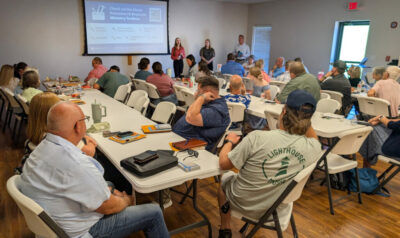 SPRINGFIELD, Tenn. – The Scripture verse printed on the front of a resource from the Fortify Initiative may not seem the most obvious choice for an effort focused on protecting the vulnerable. One might expect a verse about children or sheep. But the verse for Fortify is Nehemiah 4:17-18, which says that the men rebuilding Jerusalem’s walls carried their building materials in one hand and a weapon in the other. Verse 18 says, “Each of the builders had his sword strapped around his waist while he was building. …”
 - Practical virtual trainings help churches strengthen abuse prevention
 Abuse prevention in ministry can feel overwhelming, but free online webinars offered by the Southern Baptist Convention (SBC) Virtual Training Institute and MinistrySafe break complex safeguarding concepts into clear, actionable steps church leaders can implement today. The SBC Virtual Training Institute offers ministry leaders free, practical training designed to strengthen churches in safety, care, and responsible leadership.
 - Advising on Whether to Limit Liability or Care for Victims
 While abuse of a child by an adult is terrible, it’s usually straightforward to evaluate what is happening. But what about sexual misconduct between children? Is it always abuse? No. Is it always illegal? No. And what should we do about it? The impact on children’s lives is not measured by whether the actions are abuse or a crime—so we must take it seriously.[1] As we evaluate how to respond, it may help to use as an example several common situations. We’ll take the perspective of behavior that is discovered by a church or ministry, but parents will also have to evaluate situations they uncover.
 - ‘Don’t Leave Here and Do Nothing’: SBC Panel Calls Churches to Act on Child Exploitation
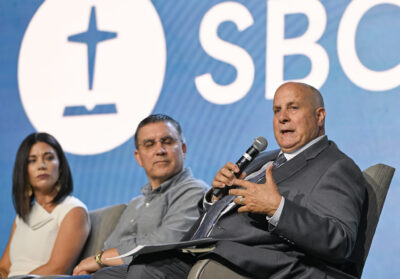 State and federal officials, survivors, and ministry leaders gathered at the 2026 SBC Annual Meeting to move Southern Baptist churches from awareness to action on child abuse, sexual exploitation, and human trafficking. She was going to church the entire time it was happening. That was the disclosure Olivia Littleton, senior director of Survivor Services for One More Child, made to a room full of Southern Baptist pastors and ministry leaders at the 2026 SBC Annual Meeting. A survivor of sexual exploitation herself, Littleton made the point with quiet precision: the children the Church is trying to protect may already be sitting in its pews.