
Insurance and Accountability (Part 1): Examining the Causes of the Abuse Crisis in Churches

David is executive director of Lockton Ministries, a 35 year old mission-minded and faith based practice group within Lockton Companies. His God-blessed, extensive education and experience in global insurance and risk management solutions has served his clients well. David has written policy, taught policy, and selectively participates as director on the boards of several nonprofits for the last 30 years. He has written or contributed to over 12 articles for various magazines and is a sought after speaker and consultant for organizations like Evangelical Press Association, Cedarville University, Christian Employers Association, Southern Baptist Convention, local churches, long-term care operators, RIMS, podcasters, etc. Prior to his joining Lockton in 2003, David spent 8 years as a risk and finance manager for multinational companies in Ohio, Pennsylvania and California. David has actively served in church operations, missions, and Bible study groups in Pennsylvania, Ohio, and California since giving his life to Christ in 1985. He attended a Christian school in Pennsylvania for 10 years and served in operations at a Christian camp for 12 years. He and his wife Carrie live in Southern California with their two sons who are both attending Cedarville University.
It is no secret that houses of worship are unfortunately engaged in a blistering crisis of adult and child sexual abuse. Beyond the atrocity of the abuse itself, some churches are increasingly guilty of concealing abuse and of placing unbiblical trust in man’s systems rather than God’s Word. Many American churches appear to be caught up in the postmodern culture of “my truth,” giving subjective feelings more authority than objective, biblical principles. In a world where both nonprofits and public companies are responding to abuse with fear, denial, and misdirection, churches—above all—must take a firm, biblical stand. Understanding how this exponential decay developed will aid in finding a resolution. The following three causes reveal how we arrived at this crisis.
The first reason is the growing presence of hidden sin and the neglect of biblical teaching on sexual purity.
Dee Dee Mayer, DMin at Pepperdine University, provides evidence of a troubling rise in pornography use among pastors, particularly those under age 45. Hidden sin, especially sexual sin, can crush and engulf an individual—and when it exists within church leadership, it can infect an entire congregation. Mayer also notes that many pastors avoid addressing controversial but necessary teachings such as lust, gender, homosexuality, and sexual morality. This avoidance results in a lack of biblical grounding on issues where the church should lead with conviction. Non-disclosure agreements and quiet resignations become tools of avoidance rather than repentance.
Theresa Sidebotham, founder of Telios Law—which focuses on preventing and responding to abuse in the church—adds that many churches, despite a proven track record that prevention methods keep children and adults safe, remain hesitant to screen workers or provide thorough training in child safeguarding and sexual harassment. According to Sidebotham, this failure often stems from naïveté or misplaced loyalty, where ministers protect friends instead of the vulnerable.
This neglect of pastoral responsibility leaves church staff unequipped to counter Satan’s arsenal of sexual temptation. Erwin Lutzer, in The Eclipse of God, warns that today’s sexual debauchery reveals how God has already handed our culture over to its “sinful desires.” As a result, hidden sin and postmodern preaching not only invite more abuse and lawsuits but also obscure truth in ways that can deter others from following Christ. For some churches, it becomes easier to hide sin than to face the financial, social, legal, and biblical consequences—revealing a lack of faith in God’s sovereignty over justice and provision.
The second reason is the collapse of biblical worldview formation among both church leaders and young believers.
George Barna, in Raising Spiritual Champions: Nurturing Your Child’s Heart, Mind and Soul, found that by age 13, most youth have already established their worldview on God, the Bible, and morality. Yet only 12% of family ministry pastors hold a biblical worldview on sin and sexuality. This deficit, Barna argues, has bred corruption in today’s church leadership. When sin is not clearly taught at a young age, the result is confusion, moral compromise, and future leadership failure within the body of Christ.
Karl Vaters, in Desizing the Church, further observes that modern churches often use numerical growth to mask shallow theology and abusive behavior. He warns that “it is harder to maintain biblical integrity when a church gets bigger.” This obsession with numbers rather than discipleship distorts biblical priorities and signals a worldview more concerned with appearance and reputational protection than truth—an environment where abuse can quietly thrive.
Part two will cover the final cause of the abuse crisis in the church and the role of insurance in accountability.
- Careful Grace: Integrating Offenders and Violent Criminals into Church
 One of the most frequent questions we receive from churches and ministry leaders is about integrating offenders into church. They wonder “Should we do it,” and “What are best practices as we carefully consider protection and stewardship.” We as pastors and ministry leaders know first hand that God is in the business of changing lives. No one, not even the worst of society’s criminals and offenders, is too far from the grace of God and the gospel. We know that the Lord can work in anyone’s life to bring redemption and salvation.
 - Fortify Initiative equips church leaders to protect, even as they build
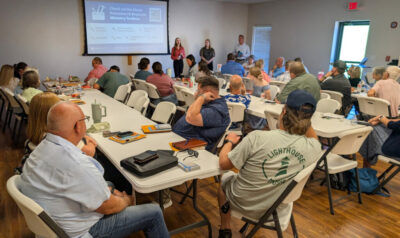 SPRINGFIELD, Tenn. – The Scripture verse printed on the front of a resource from the Fortify Initiative may not seem the most obvious choice for an effort focused on protecting the vulnerable. One might expect a verse about children or sheep. But the verse for Fortify is Nehemiah 4:17-18, which says that the men rebuilding Jerusalem’s walls carried their building materials in one hand and a weapon in the other. Verse 18 says, “Each of the builders had his sword strapped around his waist while he was building. …”
 - Practical virtual trainings help churches strengthen abuse prevention
 Abuse prevention in ministry can feel overwhelming, but free online webinars offered by the Southern Baptist Convention (SBC) Virtual Training Institute and MinistrySafe break complex safeguarding concepts into clear, actionable steps church leaders can implement today. The SBC Virtual Training Institute offers ministry leaders free, practical training designed to strengthen churches in safety, care, and responsible leadership.